
Case Study Video Interview Questions and Customer Preparation Guide
A comprehensive operational manual for selecting contributors, structuring story arcs, framing prompts, and managing filming logistics.
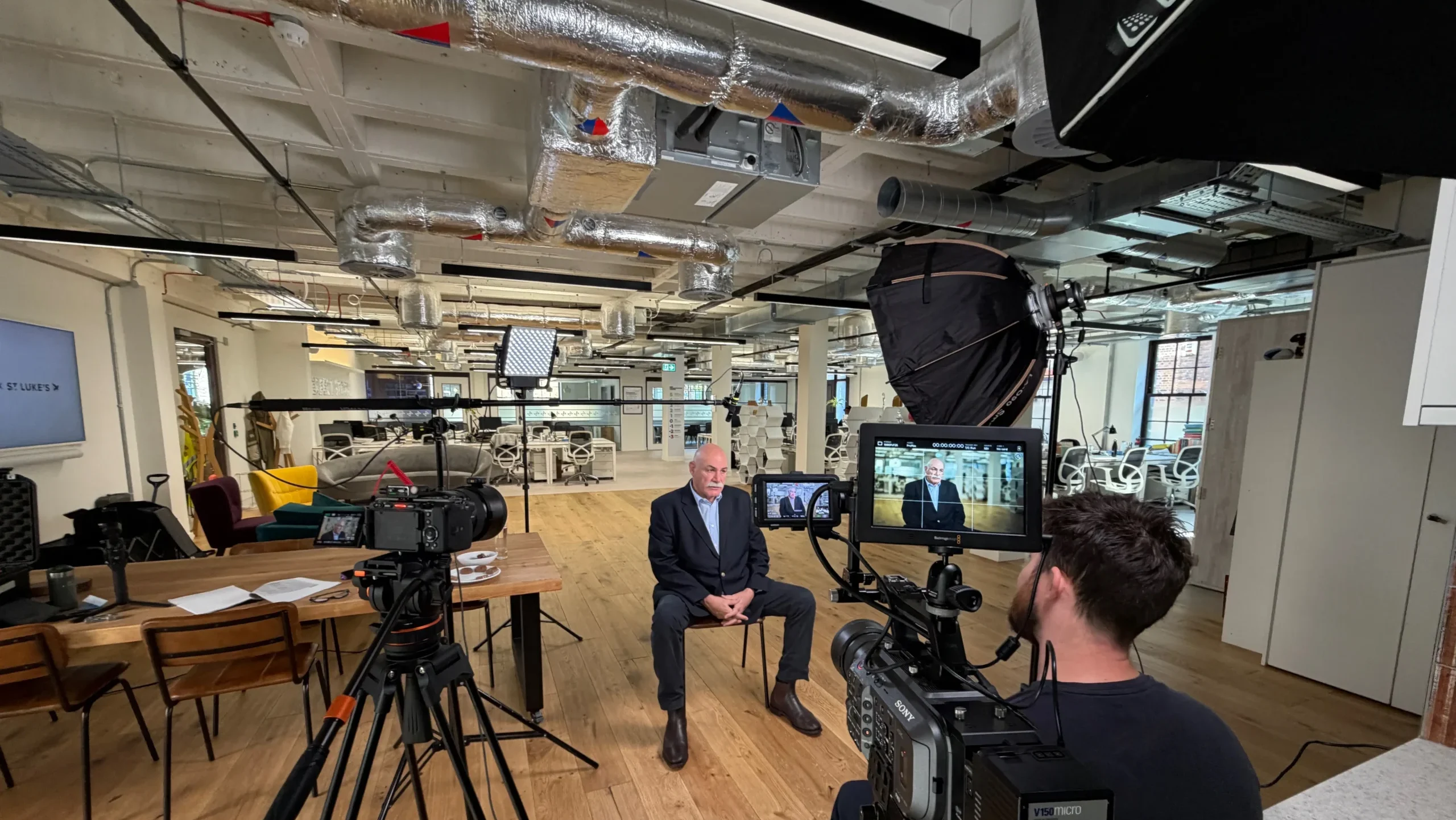
A case study video is only as good as the interview behind it. The lighting can be right, the room can be quiet, the camera can be in the right place, and the film will still be thin if the person in front of it has nothing specific to say.
Most of the work that decides this happens before the filming day. It happens when you choose which customer to ask, how you ask them, what you tell them in advance, and what you leave them free to say in their own words.
This guide covers both halves: the questions worth asking, and what to do with the customer before anyone arrives with a camera.
Choosing Who to Interview
The most useful contributor is someone who was there for the whole thing. They remember what the problem felt like before it was solved, they were involved while the work was happening, and they can speak to what changed afterwards.
That person is not always the most senior one. A director may be able to approve the project and describe the strategy, but a manager who used the thing every day will often give the more specific answer. Specific answers are what make a case study film work.
You do not have to limit your case study to a single voice. In fact, speaking to two or three different stakeholders often provides a much richer narrative and gives the editor a dynamic story to cut together. The best stories usually combine perspectives. You might invite a senior sponsor who understands the strategic business impact, alongside a project manager or daily user who can speak to the practical reality of the deployment.
Pre-Commitment Vetting
Before committing to a subject, verify three critical operational factors:
- Start-to-Finish Involvement: Were they there at the start? Someone who joined after the problem was solved can only tell you what they were told. It shows on camera.
- Organizational & Legal Sign-off: Are they allowed to say it? Some organisations need legal, compliance or communications sign-off before a named employee appears on film discussing a supplier. Finding that out in advance is a short conversation. Finding it out after filming can cost you the film.
- Scheduling Availability: Can they give you a window? A case study interview is usually a short part of a filming day, but the customer still has to be somewhere specific, at a specific time, with their phone off. If the only date that works is six weeks away, that is worth knowing before the project is scheduled.
It also helps to agree roughly what the story is before filming, without scripting it. You should both know which project you are talking about, which outcome matters, and what evidence the customer is comfortable sharing. What you should not do is tell them what to say about it.
How to Ask a Customer in the First Place
The request is easier to say yes to when it is small and specific. Tell them how long it takes, where it happens, who will be there, and what they get out of it. Thirty to forty minutes on camera in their own office is a different proposition from a vague invitation to take part in a marketing campaign.
Two things make the biggest difference to whether someone agrees:
- Complete Editorial Control (The Approval Guarantee): If you can tell the customer that they will see the finished film before it goes anywhere, and that nothing is published without their sign-off, most of the hesitation disappears. People are not usually worried about being filmed. They are worried about being quoted badly somewhere they cannot control.
- Mutual Value (The Asset Exchange): A case study film is also a film about their business, their project and their judgement. Many customers are happy to use it themselves. Offering them a copy to use on their own channels is not a concession, it is part of the trade.
A Question Bank Organised Around the Story
A long list of questions is less useful than a short list in the right order. A case study film has a shape: something was wrong, a decision was made, work happened, something changed. Questions that follow that shape produce answers that cut together. If you are interviewing multiple people, tailor these questions to their specific involvement.
| Story Stage | Core Objective | Primary Interview Questions |
|---|---|---|
| Setting the Scene | Establish context & warm up the subject. | * What does your business do, and what is your role in it?* How long have you been doing it? |
| The Problem | Build tension & articulate pain points. | * What was happening before this project started?* What was not working?* What was that costing you, in time, money or something else?* Who else in the business was feeling it? |
| The Decision | Show evaluation, friction & trust. | * What made you decide to do something about it?* What were your options?* What were you worried about?* Why did you go with this one? |
| The Work Itself | Capture the reality of implementation. | * What actually happened?* What was it like to work on?* Was there a point where it got difficult?* What surprised you? |
| What Changed | Extract tangible metrics & evidence. | * What is different now?* How do you know?* What can you point to?* What has it allowed you to do that you could not do before? |
| Reflection | Secure natural concluding thoughts. | * What would you say to another business in the position you were in?* Would you do it again?* What do you wish you had known at the start? |
Notes on Metrics and Proof
Ask for evidence rather than adjectives. “It is much faster” is a sentence anyone could say about anything. “It used to take three people a fortnight and now one person does it in a day” is a sentence only this customer can say.
If the numbers are commercially sensitive, ask what they can share instead. A direction of travel, a proportion, or a plain description of the change is usually enough, and better than a figure they later ask you to remove.
Following Up, and What to Avoid
The planned questions get you about half of what you need. The rest comes from the follow-ups.
High-Impact Follow-Up Prompts
- “Can you give me an example?” Turns a general claim into a story.
- “What did that look like day to day?” Turns an abstraction into something a viewer can picture.
- The Strategic Pause: Silence, held for three or four seconds after an answer seems to have finished, often produces the better version of the same answer.
Common Pitfalls to Avoid
- Leading Questions: Avoid anything that hands the person their answer. A question like “so it saved you a lot of time, didn’t it?” gets a yes, and a yes is unusable.
- Dependent Answers: An answer has to make sense without the question attached to it, because the question will not be in the film. If someone replies “yes, definitely”, ask the question again in a way that makes them restate the subject.
- Rehearsed Answers: Rehearsed responses usually come from someone who has been sent a script or who has decided in advance to be helpful. The way out is to move off the prepared ground and ask about a specific moment. Detail is harder to rehearse than opinion.
Operational Note on Interview Roles:
Sometimes the marketing team knows the customer well enough that the interview goes better when they ask the questions themselves, and we are happy to work that way. Other times nobody from the client is available or comfortable doing it, and a director sits in to run the interview. Either arrangement works. What matters is deciding which one it is before the day, because it changes the crew and the time needed.
Briefing the Customer Before Filming
Send something short in advance, two or three days before rather than the night before.
It should cover the purpose of the film and who it is for, the themes you want to talk about, how long it will take, who will be in the room, and where the film will be used. Add the approval point explicitly: they will see it first.
Send themes, not a script. The difference matters. A customer who knows you will ask about the original problem, the decision and the result will arrive having thought about it, which is exactly what you want. A customer who has been sent nine questions verbatim will often arrive having written answers down, and a read answer sounds like a read answer.
If there are specific figures or claims you hope they will mention, flag those separately so they can check them with whoever needs to check them. Nothing wastes an interview faster than a contributor who is unsure whether they are allowed to say the thing the film is built around.
Preparing a Remote Interview
Not every customer can be in a room with a crew. They may be in another country, or impossible to pin down for a half day, or you may need the film quickly. Our Remote Story package is built for exactly that: a recording kit goes out to the customer, theirs to keep, and the interview is directed live over a call, with a single camera on them.
Remote preparation requires a distinct approach:
- Conduct a Setup Check the Day Before: Do not wait until the day of filming. Framing, sound, lighting direction, and hardware functionality must be resolved while there is time to troubleshoot.
- Environment Control: Ask them to find somewhere with a door that closes, away from air conditioning, open-plan noise, and a window directly behind them. A window behind the subject is the single most common problem with remote recordings.
- Room Isolation: Confirm who is in the room. Ideally nobody else, and ensure all computer and phone notifications are muted.
- Clarify Expectations: Inform them that the video call is for live direction only. They are not performing to a webcam. The dedicated camera setup in front of them is what captures the final film.
Helping Someone Who Is Nervous
Almost everyone is nervous. It is not a problem unless it goes unmanaged.
- Remove the Pressure of Single Takes: Explain at the start that this is not live, that there is no limit on takes, and that an answer they are unhappy with can simply be given again. Most of the tension in an interview comes from people thinking they have one shot at it.
- Start Off-Record / Light: Spend the first few minutes on easy ground. The scene-setting questions exist partly for this. By the third or fourth answer, most people have forgotten the camera is there.
- Direct Eyeline and Reassure: Tell them where to look and why, and make it clear they are not being judged on performance. They are being asked about something they know more about than anyone else in the room.
- Reset Plainly: If an answer comes out tangled, say so plainly and ask for it again. Pretending it was fine does nobody any favours, and most people are relieved to be told.
Clothing and Location Guidelines
Wardrobe Considerations
- Recommended: Solid mid-tones work best.
- Avoid Patterns: Fine stripes, small checks, and tight patterns can create a moiré/strobing effect on camera.
- Avoid Extremes: Pure white can be hard to handle in a bright room, and pure black loses all shape in dark environments.
- Audio Hazards: Loose jewellery, lanyards, and stiff collars can catch a lavalier microphone. Avoid anything that rustles when moving.
- Backup: Suggest bringing a spare top in case the primary choice clashes with the environment background.
Location Selection
The location matters more than most people expect. What you want is somewhere quiet, interruptible by nobody, with a door, and with a background that means something. An office floor, a workshop, a site or a space where the work actually happens all tell the viewer something. A blank meeting room wall tells them nothing.
If you are interviewing multiple people in the same office, finding two different angles in the same room will keep the final video visually interesting.
Pre-Flight Environment Checklist:
- Air conditioning systems that cannot be turned off
- Proximity to active kitchens, break rooms, or printers
- Glass walls facing busy, high-traffic corridors
- Visible screens displaying confidential or sensitive customer data
- Conflicts with room bookings scheduled shortly after filming
Checklist to Send the Customer
Short enough to paste directly into an email.
- Confirm the date, time, and room, and book the room
- Pick somewhere quiet with a door that closes.
- Check for air conditioning, printers, and corridor noise.
- Avoid sitting directly in front of a window.
- Clear any screens showing customer or confidential information.
- Think about the project in advance, but do not write out answers.
- Flag any figures that need internal approval before the day.
- Wear a solid mid-tone colour, avoid fine patterns, and bring a spare top.
- Leave off anything that rustles or knocks against a microphone.
- Put your phone on silent and let colleagues know you are unavailable.
- Remember: Nothing is published until you have seen it and approved it.
Next Steps & Additional Resources
Preparing a customer and running the interview is most of the work in a case study film. If you would rather hand that part over, our case study packages cover both, from a Remote Story filmed wherever your customer is, to a full day of On-Site Stories.