
How to Plan a B2B Case Study Video
By the time the crew turns up, most of a case study video has already been decided. Which customer you asked, what you agreed the story was, whether anyone checked that the numbers can be used, who gets to sign it off. Get those wrong and no amount of nice lighting will save it.
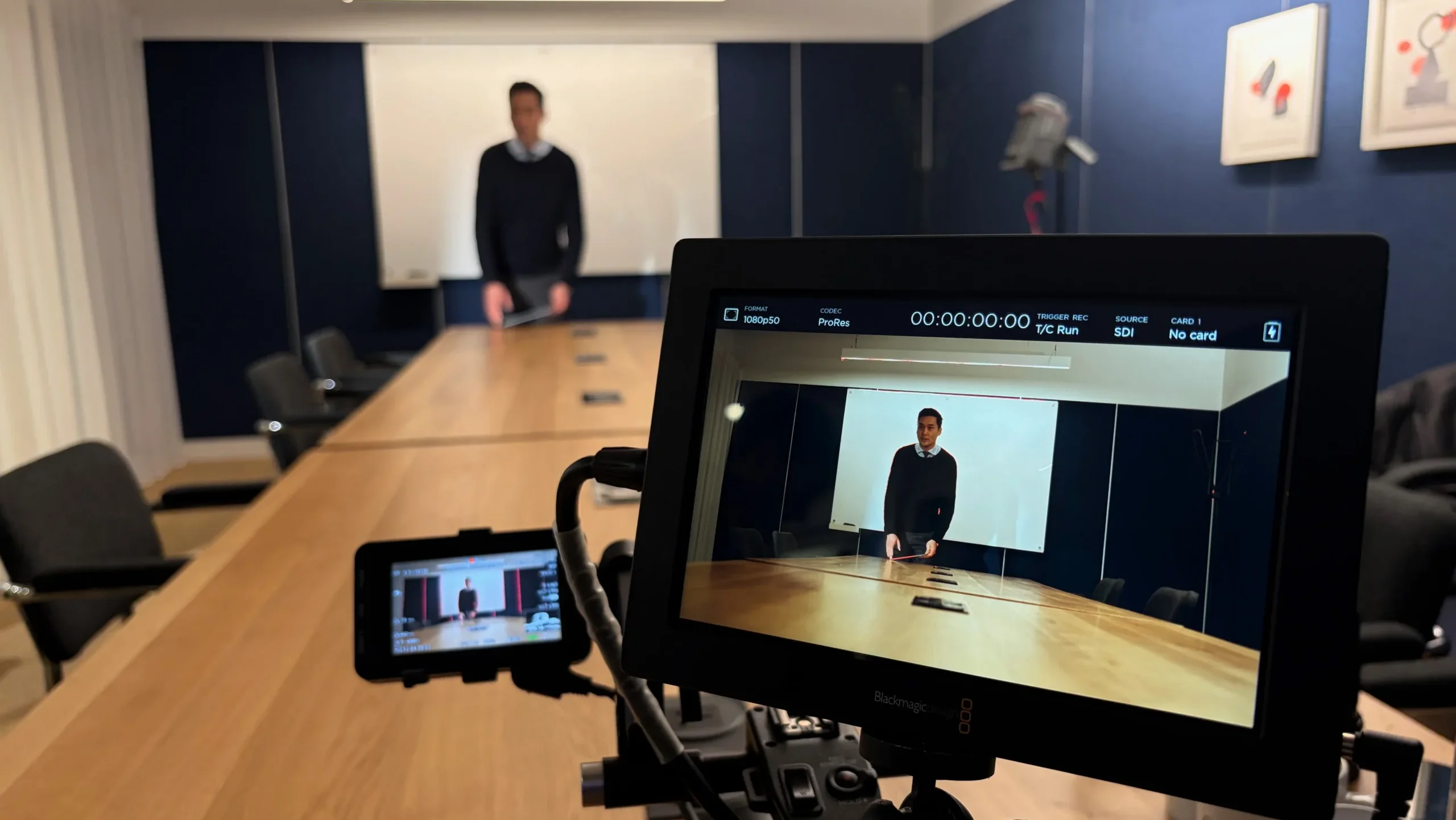
This guide is about that planning stage. It’s written for marketing teams about to commission a B2B case study video, and it follows roughly the order we’d tackle things in ourselves.
What is a B2B case study video?
It’s a short film where one of your customers explains a problem they had, what they did about it with your help, and what’s different now. The important bit is who’s talking. A buyer will believe someone in a similar job describing a result much more readily than they’ll believe you describing yourself.
People often use “case study” and “testimonial” to mean the same thing, so it’s worth separating them. A testimonial is usually one person, on camera for a minute or so, saying they’d recommend you. That’s useful, but it’s an endorsement. A case study has a story in it: what was going wrong, why they chose to act, what the work involved and how it turned out. It tends to have more than one contributor, and footage of the place or the work, so the viewer can see the change for themselves.
| Testimonial | Case study video | |
|---|---|---|
| What it does | Shows a real customer is happy | Shows how a customer solved a problem |
| Story | A recommendation and a reason or two | The problem, the decision, the work, the outcome |
| Contributors | Usually one | Usually two to four |
| Filming | Often remote | On location, where the work happens |
| Supporting footage | Little or none | Planned around the story |
| Length | 60 to 90 seconds | Two to three minutes, plus shorter cuts |
| Where it’s used | Landing pages, proposals | Homepage, sales conversations, events |
Producing one covers everything from picking the customer to handing over the final files, and our case study packages show how we do that at different levels.
Start with who it’s for and where it’ll be seen
Before anyone talks about length or style, it helps to know who’s meant to watch it and what you want them to come away thinking.
We find it easiest to put this as a question a buyer is asking. Can you cope with a business our size? Will implementation be painful? Why would we pay more for you than the other lot? A good case study answers one of those properly. If it tries to answer all of them, it usually ends up answering none.
It also helps to know where the film sits in a buyer’s decision. A case study works best near the end, when someone is close to choosing you. If your buyers don’t know you yet, a company profile video may be the better first film, and if your customers will all be at an event, filming them there is often the easiest way to get them on camera.
Then think about where it’ll actually be watched, because that changes a lot. A film your sales team sends late in a deal can take its time; the person watching already cares. The homepage version has a few seconds to earn attention. LinkedIn cuts need to work with the sound off, and probably in a vertical or square frame. And if it’s going to play on a screen at an event, people will be watching it standing up, half distracted, with a drink in their hand.
You don’t need a strategy document for any of this. A line on the audience, a line on the question and a list of where it’s going is plenty, and it’ll save an argument or two later on.
Pick a customer who has something to say
Being happy with you isn’t enough. Plenty of very satisfied customers have almost nothing to say on camera beyond “they were great”.
What we look for is someone whose situation looks like the clients you want more of, who had a real problem (not a mild irritation), who can talk about it in specifics, and who can point to what changed. They also need to be willing to do it, and allowed to.
That last part catches people out. Some organisations won’t let a named employee appear in a supplier’s film without sign-off from comms, legal or someone senior. It’s a five minute conversation at the start. Left until after the shoot, it can cost you the whole film.
The other trap is going for the biggest logo on your client list and hoping the story turns up on the day. A famous name with a vague story usually makes a weaker film than a smaller customer with a sharp one. If you can get both, brilliant, but look at the story first.
There’s more on choosing the right person within the customer’s business, and how to ask them so it’s easy to say yes, in our guide to case study video interviews.
An example from our own work
When we made the Culture House Sunderland film for Seeper, the London studio that designed the building’s immersive spaces, the decision that shaped it most was taken in planning, weeks before we got there.
Seeper didn’t want to be in their own case study. No one from the studio on camera talking through the technology, no voiceover explaining the brief. Their worry was that a film about a civic building led by the agency behind it would feel like an advert, and the people they wanted to reach (prospective clients and awards juries, mostly) would spot that immediately.
So instead of interviewing the people who built it, we went looking for people who could speak for the city. Leanne Littlewood from Sunderland City Council, who commissioned the work. Barry Hyde of the Futureheads, who runs a pub in town, and his bandmate Ross Millard, who made the archive-driven clock in the atrium. And Alyson Dixon, the Team GB marathon runner, who now works at the Sunderland AFC Foundation of Light.
The technology is in almost every shot and nobody ever explains it. People in the industry can tell exactly what was built and who could have built it. Everyone else just sees a city getting a building it had waited a long time for. Choosing who went in front of the camera did more for that film than anything we did over the two filming days. The full project is on our Seeper case study page.
Agree the story, and what backs it up
Once the customer has said yes in principle, have a short call before filming. It isn’t a rehearsal. It’s a check that you’re both thinking of the same project and the same result.
First, what actually changed? The film needs a before and an after, and if nobody can say what was different afterwards, you don’t have a story yet, however warm the relationship is.
Second, what can be shown? People get a change much faster when they can see it, so make a note of what exists to film (a site, a process, a product, a screen, a team at work) and what would need permission.
Third, which claims can the customer actually put their name to? If the story hangs on a figure, find out now whether they’re allowed to share it. A film built around a number that legal later removes has to be re-cut around something else.
Numbers aren’t the only evidence, and often they’re not the most convincing. When figures are confidential, or just don’t exist, the outcomes people describe in their own words work really well on camera: a job that used to take a team a week and now takes an afternoon, a report nobody has to compile any more, a problem that’s stopped coming up in meetings. They’re specific, and only that customer could say them, which is why people believe them.
If you want something to fill in, our case study video brief template walks through what’s worth agreeing before filming, including what can’t be discussed or shown.
Prepare the interview, but don’t script it
The interview is where the story either turns up or doesn’t, and the temptation to control it by sending a script nearly always backfires. You can hear it when someone’s reciting.
What works better is sending themes rather than questions word for word: the original problem, why they decided to act, what the work involved, what’s different now. That way people arrive having thought about it, without having rehearsed it. On the Boxooo company films we did exactly this with the client’s draft questions, boiling them down to three themes per film and a few quick personal prompts, and the answers were far more natural for it.
On the day, open questions that ask for examples do most of the work. A few we come back to a lot:
- What was happening before you started working with them?
- Why did it need sorting out when it did?
- What made you go with this approach?
- What did the work actually involve?
- What’s changed? Can you give me an example?
- What would you say to another business in the same position?
It also helps to tell people up front that nothing’s live, any answer can be done again, and they’ll see the film before it goes anywhere.
The full question bank, organised by each stage of the story, is in our case study video interviews guide, along with how to brief the customer, run a remote interview and look after someone who’s nervous.
Plan the footage and the logistics
Supporting footage is what turns an interview into a film. It’s also the thing most often left until the day, by which point you’re filming whatever happens to be there.
Work out what someone needs to see to believe the story. If the customer talks about a new site, show the site. If they talk about the team working differently, show the team. If the product lives on a screen, ask for screen recordings in advance and at a decent resolution, because filming a monitor almost never looks good.
Then the practical stuff. Where are the interviews happening, and is the supporting footage in the same building? Does anyone need a site induction, PPE or an escort? Some places need permission to film at all, including client sites, shared offices and anywhere with other people’s data on screen. Senior people are hard to get in one room on one day, so if the only way to film everyone is across separate days, you want to know that when you’re scheduling, not on the morning of the shoot.
And find a proper room for the interviews: a door that shuts, away from air conditioning, kitchens and open plan chatter, ideally with a background that says something about the business. A blank meeting room wall tells the viewer nothing. Light matters too. On the Seeper shoot we’d planned to interview Alyson in front of a window with the Stadium of Light behind her, but with only two portable lights there was no way to balance her against that much daylight. We moved her somewhere we could control and made the connection to the stadium in the edit instead.
For the day itself, our guide to planning a corporate filming day goes into more detail.
Sort out approvals and deliverables before you film
Approvals are where case study films most often get stuck, and it’s rarely because anyone’s being awkward. Usually nobody agreed at the start who needed to see what.
There can be four separate sign-offs, and it’s worth putting a name next to each one before filming:
- The customer agreeing to take part, often through their comms or marketing team
- The customer approving any claims or figures, sometimes via legal or compliance
- Your own brand team, on how your business comes across
- Sign-off of the final edit
On your side, have one person collect and consolidate the feedback. Five separate sets of comments on the same cut, some of them contradicting each other, will add days to an edit. Someone new appearing at the final stage and asking to restructure it adds more.
Agree the deliverables at the same time: the main film, any shorter versions, vertical or square cuts for social, captions, and when each one is due. It’s also worth agreeing what revisions are measured against. If both sides signed off the brief, you’ll know when the film’s finished. If the brief was vague, it never quite is.
A quick word on budget
The things that move the cost most are the number of contributors, how many locations and filming days are involved, whether a director from our team runs the interview or your own team does, and how many finished versions you need. The edit is usually the bigger half of the job, because every minute of interview has to be watched and weighed before the story can be put together. On the Seeper film the first assembly ran to fifteen minutes before we got it down to four, and then to two.
Our guide to case study video costs goes through all of it, with our actual prices.
The brief on one page
If you only write one thing down before commissioning, make it this.
| Decision | What to agree |
|---|---|
| Audience and purpose | Who should watch, and what should they understand afterwards? |
| Customer and contributors | Whose experience is most relevant, and who can explain it? |
| Story and evidence | What was the problem, what changed, and what supports the claims? |
| What we can show | What can we film or show to make the story real? |
| Approvals | Who approves taking part, the claims and the final edit? |
| Deliverables | Where will the film go, and which versions do we need? |
Mistakes we see a lot
- Choosing a well known customer without checking they’ve got a story
- Asking contributors to learn promotional answers
- Leaving the supporting footage until the day
- Building the film around claims nobody’s allowed to approve
- New reviewers turning up late in the edit
- Ordering social cuts without a plan for using them
Planning checklist
You’re ready to brief a production company when you can tick all of these.
- We know who the film is for and the buying question it answers
- We know where it’ll be used and which versions we need
- We’ve chosen a customer with a specific, relevant story
- The customer has agreed in principle and knows what’s involved
- We know who at the customer has to approve them taking part
- We’ve agreed what changed and what evidence supports it
- Any figures have been checked with whoever has to approve them
- We know what supporting footage or screen material is needed
- Locations, access and any filming permissions are sorted
- Contributors are free on the filming day or days
- A quiet interview room is booked for longer than we need
- Contributors have been sent themes, not a script
- One person on our side is collecting feedback
- Deliverables, captions and deadlines are agreed
Want a hand planning yours?
This is the part of the job we enjoy most, and it’s where most of the film gets made. If you’ve got a customer in mind and want to talk through whether the story’s there, or you need help turning it into a production brief, get in touch.
You can also see how we put case study films together at each level on our case study packages page.