
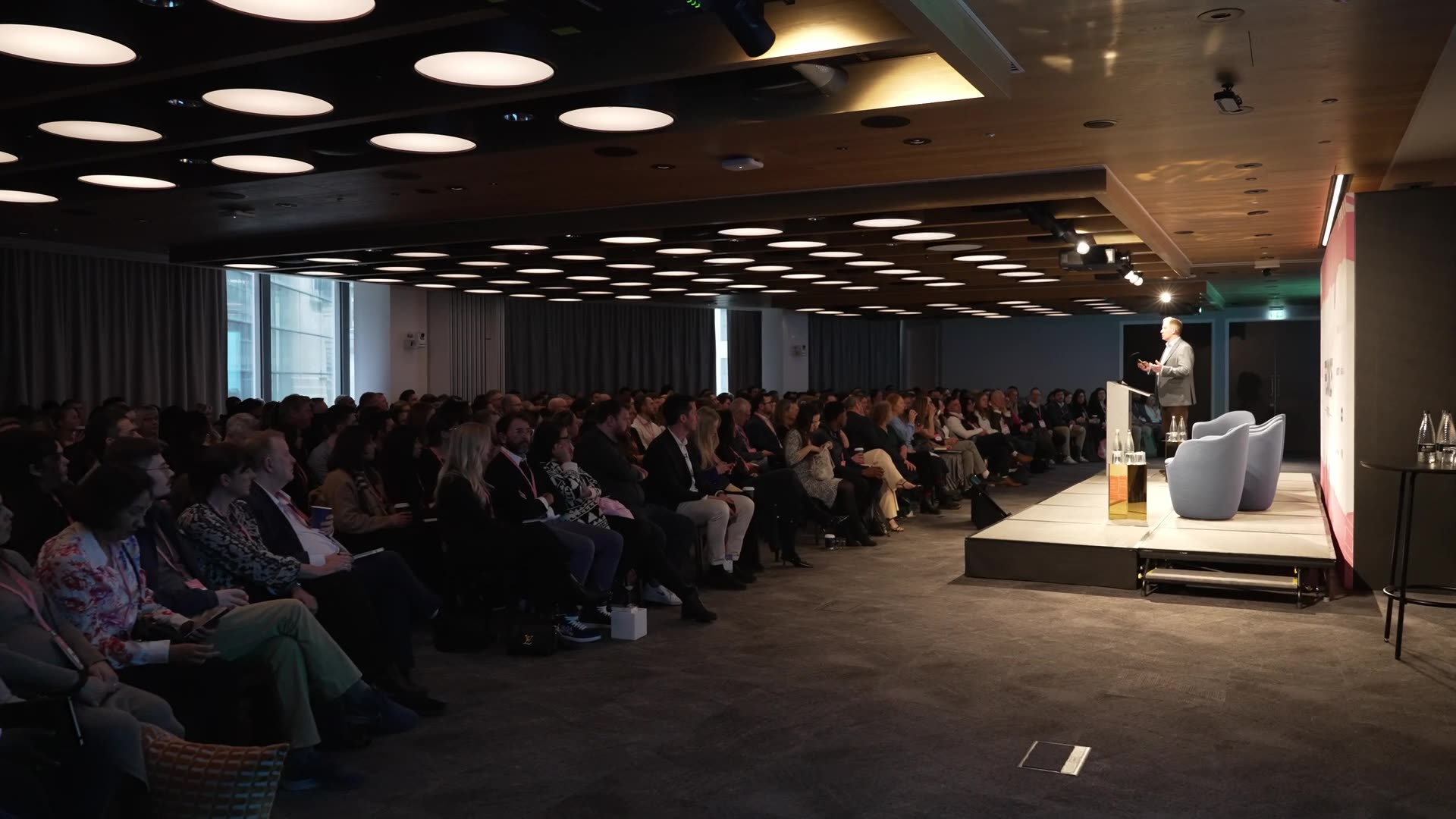
Most corporate events are filmed badly, and the reasons are boring. Not the wrong camera. Not the wrong crew, usually. The event was filmed without anyone deciding what the footage was for, so the finished video is forty minutes of stage coverage nobody watches and a folder of clips nobody can use.
This guide covers what actually determines whether event filming is worth the money: a few decisions worth making before the day, the handful of things that matter on the day, and what happens to the footage afterwards. It is written for the person organising the event, not for camera operators. And to be clear at the outset, most of what follows is work an experienced crew does for you. Organising an event is more than enough for one person. The point is knowing which decisions are worth ten minutes of your time, not adding a production project to your plate.
Before Anything Else: What Is the Footage For?
Everything about how an event should be filmed follows from what the video needs to do afterwards. These are different jobs:
A highlights film to sell next year’s tickets needs energy, atmosphere, delegates enjoying themselves and short punchy soundbites. A session recording for people who could not attend needs clean, complete talk coverage with reliable audio and slides. Social clips need moments that work at thirty seconds with captions, filmed knowing they will be viewed on a phone. Internal comms footage needs the CEO’s keynote and the awards, and very little else. Sponsor deliverables need logos visibly in shot, which sounds trivial until the sponsor asks where theirs is.
An event can serve several of these at once, and it works best when they are agreed before the day, because they need different things filmed in different ways. The most expensive sentence in event video is “can we also get a version for…” asked in the edit, about footage that was never captured. That said, a good crew films with reuse in mind by default, precisely because plans change and new uses appear later.
If you take one thing from this guide: spend ten minutes writing down what the video is for. One line per output. If you genuinely do not have ten minutes, tell your production company the outputs you think you want and let them ask the questions. Either way, that conversation does more for the final result than any equipment decision.
Pre-Production: The Unglamorous Part That Decides Everything
The venue, known in advance, by whatever means is easiest. Seeing the venue beforehand answers most of the questions that otherwise get answered at 7am on the day: where cameras can stand without blocking sightlines, where the light comes from, whether the stage is lit like a stage or like a meeting room. A recce is ideal but often unnecessary. A floor plan, a handful of photos, the venue’s own gallery page and a short call with their AV team usually cover it. If all you have time to send is a link to the venue website and the run sheet, send that. It is more useful than nothing and a decent crew will fill in the rest.
The run sheet is the shot list. Event filming does not really use a traditional shot list, because an event is not a controlled shoot. What it uses is the run sheet, annotated: which sessions must be covered in full, which speakers matter most, when the moments that cannot be re-staged happen, awards, announcements, the closing remarks. Anything not on that annotated run sheet gets captured only if convenient, and everyone knows it in advance.
Talk to the venue’s AV team early. The single best audio source at most conferences is a direct feed from the sound desk, and arranging one is a five minute conversation two weeks out or a stressful negotiation at 8am. The AV team also know things about the room the venue’s events manager does not.
Interviews work best booked, but they are not all or nothing. If speaker interviews matter to the final film, the reliable version is a quiet corner, a slot in the schedule and named people who have agreed. Fifteen minutes per person, away from the noise, produces material that can carry a film. But events are social, and an experienced crew picks up good unplanned moments too: a speaker buzzing straight after their talk, a delegate with something genuine to say. If pre-booking is one task too many, tell the crew who is worth catching and let them work the room.
Sometimes the smartest version is neither. At FFECON, the financial crime conference we have filmed for FINTRAIL for the past two years, the organisers chose to hold all the interviews until the end of the day, when attendees had actually experienced the event they were being asked about. It freed the crew to spend the whole day on b-roll, and once the keynotes finished and the room settled into drinks and conversation, the empty theatre became the interview set: six interviews, back to back, in under an hour. The participants had a full day of impressions to draw on, and it showed in the answers.
There is no single right way to schedule interviews. There is only a decision, made deliberately, at the right time.
Permissions, ideally before the day. Filming attendees needs consent handled properly, usually a line at registration and signage at the entrance, and some organisations attending your event will have their own rules about staff appearing on camera. It is a small piece of administration in advance and a headache afterwards, so it is worth doing early. Your production company should be able to give you the standard wording rather than leaving you to draft it.
On the Day
A well-prepared event shoot is mostly uneventful, which is the point. A few things genuinely matter:
Early means before the doors, not before the keynote. Setup, sound checks and a walk of the room have to happen before delegates arrive, both because it works better and because a crew rigging lights through a networking breakfast is exactly the intrusive presence event filming is supposed to avoid.
Audio is the thing that cannot be fixed. A slightly soft shot of a speaker is usable. A recording with air conditioning hum over the keynote is not. Desk feed where possible, radio mics on key speakers as backup, and a crew member actually monitoring sound rather than assuming. If one thing gets over-resourced, it should be this.
The stage is half the event. The talks are why everyone came, but the footage that makes an event film feel alive happens off stage: reactions, conversations, laughter in the breaks, the room filling up, details of the venue and the branding. A crew that only points cameras at the stage delivers a recording. A crew that works the room delivers a film.
Live events do not follow the plan, and that is fine. Sessions overrun, speakers swap, the schedule slips. This is normal and a prepared crew absorbs it, which is precisely why the annotated run sheet matters: when time is squeezed, everyone already knows what cannot be dropped.
Post-Production: Where the Value Is Realised or Wasted
Agree the edit list before the event, not after. The deliverables, a three minute highlights film, full session edits, six social clips, whatever was agreed, should be settled in pre-production. The edit is where those get made, not where they get invented.
Highlights films earn their length. The standard event highlights film runs two to four minutes, and shorter usually works harder. The test is honest: would someone who did not attend watch to the end? Past four minutes, mostly no.
Session recordings are a different product. Full talks want clean edits, slides dropped in where they help, and chapters so viewers can skip to what they came for. They are a resource, not a story, and editing them like a story wastes money.
Captions are not optional. Most social video plays silently. Clips without captions are clips that do not work.
Delivery includes the file people actually need. A finished event package typically lands as the main film, session edits, cut-downs in the right aspect ratios for each platform, and stills pulled from the footage. Agreeing formats in advance means the LinkedIn clip is 9:16 because it was framed knowing it would be, not cropped down from a wide shot and hoping.
The Question Underneath All of It
One filming day at an event can feed a content pipeline for months: the highlights film, the session library, the social clips, speaker interviews, next year’s promo. Or it can produce one long video that gets watched by the people who were already there.
The difference is not budget and it is not equipment. It is whether someone thought about the outputs before the cameras arrived. That someone does not have to be you.
Plenty of the events we film are for teams with no time to plan a production alongside everything else, and that is fine. A run sheet, a venue link and a short call is enough for us to build the rest, ask the right questions and get on with it. The planning in this guide describes what good looks like, not a test the client has to pass.
Our Event Packages set the deliverables out as fixed-price coverage options agreed up front, which exists precisely so the thinking happens at the right time without adding to your workload. And if you are planning an event and want a second opinion on what is worth filming, we are happy to have that conversation before you commit to anything.
Recent Posts


Leave a Reply